




Interstates 64 and 70 are among the busiest highways in the St. Louis area. Daily congestion, sudden slowdowns, construction zones, and heavy commercial traffic create conditions where a single mistake can trigger a chain-reaction crash involving multiple vehicles.
When several cars collide in rapid succession, determining who is legally responsible becomes far more complicated than in a two-vehicle accident. Under Missouri law, liability in multi-vehicle crashes is based on negligence and comparative fault. That analysis can be complex, especially when drivers offer conflicting accounts of what happened.
Understanding why these crashes often lead to disputes can help injured victims recognize the importance of a careful investigation.
How Chain-Reaction Collisions Happen on I-64 and I-70
Multi-vehicle crashes often begin with a single triggering event. A driver may brake suddenly due to congestion, a lane closure, or debris in the roadway. Another driver, following too closely or distracted, may fail to stop in time.
Once the first impact occurs, vehicles behind may have little opportunity to avoid becoming involved.
Common contributing factors on St. Louis interstates include:
- Heavy rush-hour congestion.
- Frequent merging near exits and interchanges.
- Construction zones with narrowed lanes.
- Speed differentials between passenger vehicles and commercial trucks.
- Distracted driving in stop-and-go traffic.
When vehicles are traveling at highway speeds with limited spacing, even a momentary lapse in attention can trigger a multi-car collision.
Why Determining Fault Is More Difficult
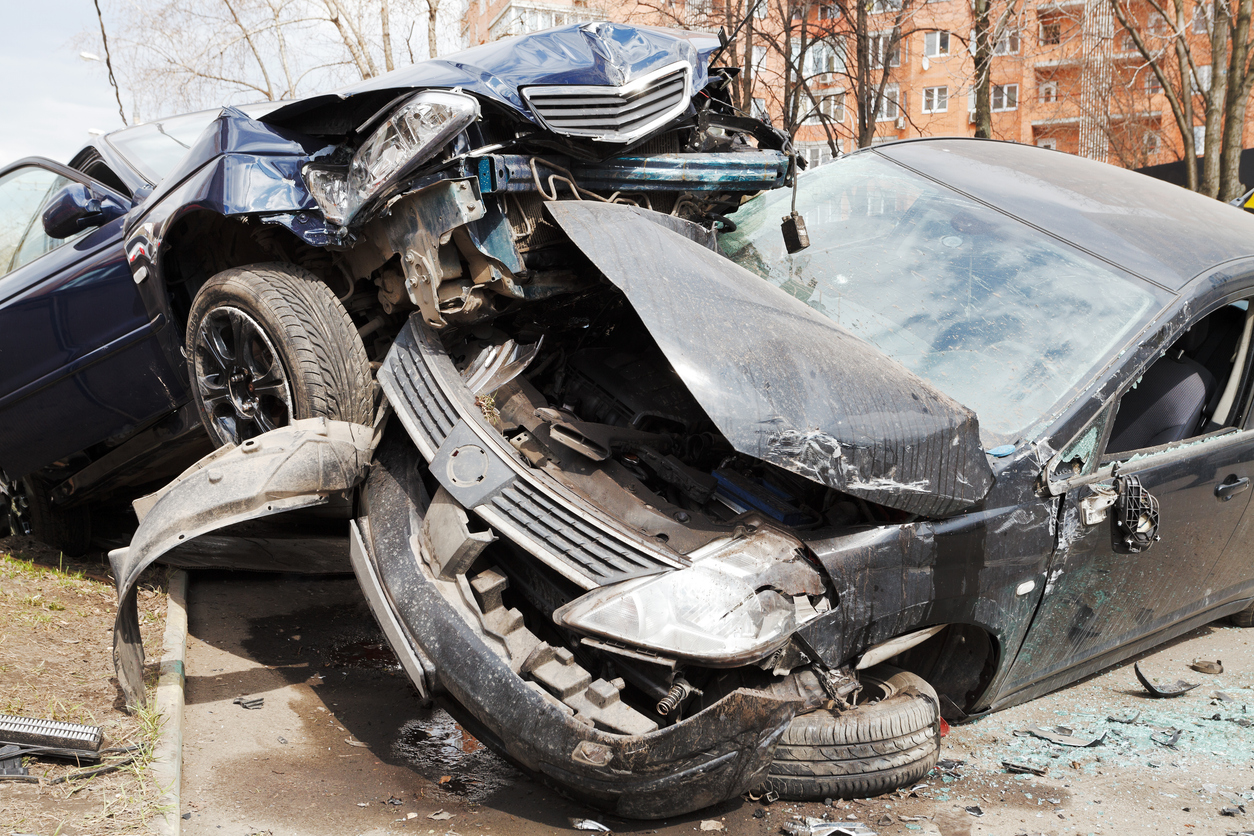
In a two-vehicle crash, liability may be relatively straightforward. In a multi-vehicle collision, several drivers may claim that another vehicle caused the initial impact.
Disputes often center on questions such as:
- Which vehicle struck first?
- Was there a sudden and unavoidable stop?
- Was a driver following too closely?
- Did someone change lanes abruptly?
- Did a commercial vehicle fail to maintain a safe distance?
Each driver may describe the sequence differently. Without objective evidence, insurance companies may struggle to assign responsibility or may attempt to shift blame.
Missouri’s Pure Comparative Fault System
Missouri applies a pure comparative fault rule. This means that more than one driver can share responsibility for a crash.
Courts assign each party a percentage of fault based on their conduct. Their percentage of fault reduces an injured person’s compensation, but does not eliminate it.
For example, if a driver is found 20 percent responsible for a crash, their recovery would be reduced by that percentage.
In multi-vehicle collisions, fault may be divided among multiple drivers. This makes liability analysis more detailed and often more contentious.
Rear-End Impacts Are Not Always Simple
Many people assume that the last driver in a chain-reaction crash is automatically responsible. While rear-end collisions often involve following too closely, the analysis is not always that simple.
Missouri courts examine whether:
- A driver was maintaining a reasonable following distance.
- Traffic slowed predictably.
- A driver made a sudden and unsafe maneuver.
- Mechanical failure played a role.
If the initial collision was caused by a negligent lane change or abrupt stop, liability may extend beyond the final vehicle in the chain.
The Role of Commercial Vehicles
I-64 and I-70 carry significant commercial truck traffic. When a tractor-trailer is involved in a multi-vehicle crash, the situation becomes even more complex.
Commercial vehicles require longer stopping distances and are subject to federal safety regulations. If a truck driver was speeding due to conditions, distracted, fatigued, or following too closely, both the driver and the trucking company may share responsibility.
Electronic logging devices, maintenance records, and onboard data can become critical evidence in these cases.
Evidence That Matters in Multi-Vehicle Crashes
Because multiple drivers and insurers are involved, evidence is often disputed.
Key evidence may include:
- Police crash reports.
- Photographs of vehicle damage and resting positions.
- Dashcam or traffic camera footage.
- Witness statements.
- Event data recorder information.
- Commercial vehicle logs and maintenance records.
Accident reconstruction experts are sometimes necessary to determine how the sequence of impacts unfolded.
The sooner this evidence is preserved, the stronger the claim may be.
Why Insurance Companies Dispute These Cases
When several vehicles are involved, multiple insurance companies may attempt to limit exposure. Each insurer may argue that another driver bears primary responsibility.
Common defense arguments include:
- The crash was unavoidable due to traffic conditions.
- Another driver initiated the chain reaction.
- The injured person contributed to the crash.
These disputes can delay compensation and create confusion for injured victims who are already dealing with medical bills and recovery.
How Gogel Law Firm Evaluates Complex Interstate Crashes
Multi-vehicle crashes require careful and detailed analysis. Gogel Law Firm examines how each driver responded to traffic conditions and whether their conduct met Missouri’s standard of reasonable care.
Our attorney reviews:
- Following distances.
- Speed relative to congestion.
- Lane changes and merging behavior.
- Commercial vehicle compliance with safety regulations.
- Comparative fault arguments raised by insurers.
This approach allows us to build a clear narrative based on evidence rather than competing stories.
Speak With Gogel Law Firm After a Multi-Vehicle Crash
If you were injured in a multi-vehicle collision on I-64 or I-70 in St. Louis, determining fault may be more complicated than it first appears.
Contact Gogel Law Firm at (314) 370-8173 or online to schedule a free consultation. Our St. Louis personal injury attorney can review your case, explain how Missouri comparative fault law applies, and help you understand your legal options.
